
• 15+ Years Refrigeration Experience
• 6-Month Workmanship Guarantee
• 24/7 Emergency Support Available
• Certified Refrigeration Technicians
• Proper Leak Detection Before Regassing
• Same-Day Fridge Regassing Centurion
When you need fridge regassing in Centurion, the first step should always be proper fault checking. A fridge that is not cooling, running continuously, icing up, or losing temperature may have a refrigerant problem, but regassing is not always the correct solution. Low gas usually means there may be a leak, pressure issue, blocked system, compressor problem, or another cooling fault that needs to be checked before gas is added.
Centurion Appliance Repairs helps customers arrange practical fridge regassing and refrigeration fault checks in Centurion for domestic fridges, freezers, fridge-freezer combinations, commercial fridges, display fridges, chillers, and selected cooling systems. Our focus is on identifying the real cause of poor cooling, explaining the repair option clearly, and helping you avoid unnecessary regassing where it will not solve the problem.
Call 079 976 2941 to request fridge regassing in Centurion or use the booking form to send your appliance details.
Fridge regassing is the process of restoring the correct refrigerant level in a fridge or cooling system after the fault has been properly checked. A fridge does not normally “use up” gas like fuel. If refrigerant is low, there is usually an underlying reason that needs attention.
We assist with fridge regassing requests for:
Domestic fridges
Freezers
Fridge-freezer combinations
Upright fridges
Chest freezers
Display fridges
Bar fridges
Under-counter fridges
Commercial fridges
Chillers
Selected refrigeration systems
If your fridge is not cooling properly, it may need more than gas. The cooling system should be inspected to confirm whether regassing is suitable.
No. Fridge regassing is only useful when a refrigerant-related fault has been confirmed. Many customers request regassing because the fridge is warm, but poor cooling can be caused by several different issues.
A fridge may stop cooling because of:
Faulty thermostat
Faulty compressor
Fan motor problem
Damaged door seal
Blocked airflow
Dirty condenser coils
Faulty temperature sensor
Electrical fault
Defrost system fault
Refrigerant leak
Blocked capillary tube
Control board problem
Poor ventilation around the fridge
Adding gas without finding the cause can waste money. If there is a leak, the fridge may cool for a short time and then lose gas again. This is why proper fault diagnosis is important before regassing.
A fridge may need refrigerant-related attention if the cooling system has lost gas or has pressure problems. However, these signs still need confirmation through inspection.
Possible signs include:
Fridge running but not getting cold
Freezer not freezing properly
Compressor running for long periods
Fridge cooling weakly even on the coldest setting
Uneven cooling between sections
Ice forming in unusual areas
Warm fridge compartment while motor keeps running
Slow temperature recovery after opening the door
Commercial fridge struggling to hold temperature
Chiller temperature rising during business hours
Previous regassing did not last
These symptoms can also come from non-gas faults, so regassing should not be done blindly.
A fridge that is not cooling is one of the most common reasons people ask for fridge regassing in Centurion. In some cases, low refrigerant may be involved. In other cases, the problem may be electrical, mechanical, airflow-related, or thermostat-related.
Possible causes include:
Refrigerant leak
Compressor not pumping properly
Faulty thermostat
Faulty fan motor
Blocked air vents
Defrost system failure
Dirty coils
Damaged door gasket
Sensor fault
Poor ventilation
Control board issue
If your fridge is warm inside, keep the door closed as much as possible and request help early. Continued running while the fridge is struggling may place extra strain on the compressor.
A freezer that is not freezing may also lead customers to request regassing. Low refrigerant can affect freezing performance, but there are other possible causes too.
Common causes include:
Refrigerant leak
Faulty compressor
Damaged door seal
Defrost fault
Fan problem
Thermostat fault
Blocked airflow
Temperature sensor problem
Dirty condenser coil
Electrical fault
Overloaded freezer
If frozen food is starting to thaw, avoid opening the freezer unnecessarily and arrange a fault check as soon as possible.
A fridge that runs all the time may be trying to reach the correct temperature but failing. This can happen when the cooling system is weak, the door seal is damaged, the thermostat is faulty, or the appliance is placed in a hot or poorly ventilated area.
Possible causes include:
Low refrigerant
Compressor strain
Dirty condenser coils
Damaged door seal
Warm room temperature
Poor ventilation around the fridge
Faulty thermostat
Defrost problem
Fan issue
Overloaded compartments
If the fridge runs continuously and still does not cool properly, it should be checked before the compressor is damaged.
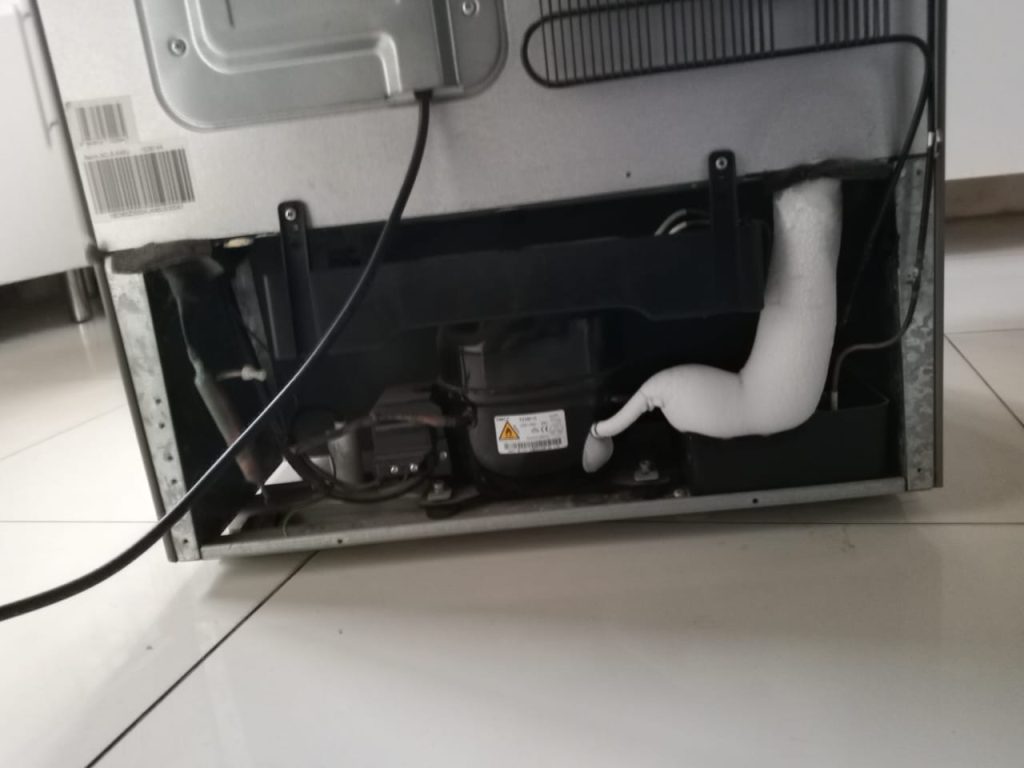
If a fridge has lost refrigerant because of a leak, the correct approach is usually to locate and address the leak where practical before regassing. Simply adding refrigerant without dealing with the leak may only provide temporary cooling.
Leak-related warning signs may include:
Fridge was regassed before but stopped cooling again
Cooling worked briefly and then failed
Oily marks near pipework or joints
Hissing sound from the cooling system
Compressor running continuously
Poor cooling after transport or damage
Rusted or damaged pipework
Not every leak is economical to repair. Some leaks may be difficult to access or too costly relative to the value of the fridge. In such cases, replacement may be the more practical option.
Domestic fridge regassing may apply to household fridges, fridge-freezer combinations, upright fridges, under-counter units, and chest freezers. These appliances are used daily, so cooling faults can quickly affect food storage and household routines.
We assist with domestic cooling faults such as:
Fridge not getting cold
Freezer section not freezing
Fridge running continuously
Food spoiling quickly
Water leaking with poor cooling
Fridge icing up abnormally
Temperature control problems
Fridge not cooling after moving house
Fridge not cooling after power issues
Weak cooling after previous repair attempts
Before regassing, the fridge should be checked to confirm whether refrigerant is actually the problem.
Commercial fridges and chillers work harder than domestic appliances. They are used in shops, restaurants, cafés, offices, guesthouses, bars, butcheries, takeaways, and food businesses. When a commercial fridge loses temperature, stock and sales may be at risk.
We assist with commercial refrigeration faults involving:
Display fridges not cooling
Beverage coolers running warm
Under-counter fridges losing temperature
Chillers struggling during trading hours
Commercial freezers not freezing
Cold storage units running continuously
Refrigerant leak concerns
Temperature controller issues
Compressor and fan-related problems
For wider business refrigeration support, visit our commercial refrigeration services in Centurion page.
Display fridges and chillers often operate in warm environments and are opened frequently. If they begin running warm, the cause could be low refrigerant, dirty coils, weak fans, poor airflow, door seal problems, thermostat issues, or compressor faults.
Common chiller and display fridge symptoms include:
Cabinet not reaching set temperature
Drinks not getting cold
Display fridge running continuously
Ice build-up on coils
Water leaking from the unit
Compressor overheating
Temperature rising during peak hours
Digital controller showing abnormal readings
Poor airflow inside the cabinet
These units should be checked quickly when stock is at risk.
Freezers may require refrigerant checks if they are no longer freezing properly and other common causes have been ruled out. A freezer that is low on refrigerant may cool weakly, run constantly, or fail to reach freezing temperature.
We assist with freezer cooling faults such as:
Chest freezer not freezing
Upright freezer running warm
Food defrosting
Freezer running continuously
Excessive ice in unusual areas
Compressor running but poor cooling
Freezer cooling weakly after previous regassing
Commercial freezer temperature rising
For freezer-specific repairs, visit our freezer repairs in Centurion page.
Refrigerant should stay sealed inside the system. If gas is low, the cause must be considered.
Common causes include:
Small leaks in pipework
Rusted or damaged tubing
Faulty joints or connections
Damage during moving or transport
Poor previous repairs
Vibration damage
Corrosion around evaporator areas
Punctured pipework during cleaning or defrosting
Age-related deterioration
Manufacturing or installation-related weakness
If refrigerant is leaking, regassing without addressing the leak may only be a short-term fix.
A proper regassing assessment helps determine whether refrigerant work is needed and whether the fridge is worth repairing.
The process may include:
You provide the fridge type, brand, model if available, symptoms, and your Centurion suburb. Useful details include whether the compressor runs, whether the freezer works, and how long the fridge has not been cooling.
The appliance is checked to understand whether the problem may be related to refrigerant, compressor performance, airflow, thermostat control, fans, defrost components, or electrical faults.
If low refrigerant is suspected, the system may need to be checked for leak-related signs or pressure problems. If a leak is present and repairable, it should be addressed before regassing.
If regassing is practical and approved, the correct refrigerant process is carried out according to the appliance requirements. The fridge should not be overfilled or filled with the wrong refrigerant type.
After regassing, the fridge should be tested to check whether cooling performance improves. Temperature recovery may take time depending on the appliance size, room temperature, and contents.
Different fridges and refrigeration systems may use different refrigerants. Using the wrong refrigerant or incorrect quantity can damage the appliance, reduce performance, or create safety concerns.
Correct refrigerant handling matters because:
Fridges are designed for specific gas types
Too much refrigerant can affect cooling performance
Too little refrigerant will not solve the problem
Wrong gas can damage components
Some refrigerants require careful handling
Leak problems must be considered
Pressure levels affect compressor operation
This is why fridge regassing should be handled by someone with refrigeration knowledge and proper equipment.
The cost of fridge regassing in Centurion depends on the type of fridge, refrigerant type, whether leak checks or repairs are needed, the size of the system, and whether the appliance is domestic or commercial.
Pricing may be affected by:
Domestic or commercial fridge type
Size and capacity of the fridge
Refrigerant type required
Whether there is a leak
Whether leak repair is practical
Compressor condition
Labour time
Access to the unit
Whether previous regassing failed
Whether the fridge also needs other repairs
Whether the appliance is a fridge, freezer, chiller, or display unit
A simple refrigerant top-up may cost less than leak detection, leak repair, compressor-related work, or regassing a larger commercial system. A proper fault check is needed before accurate pricing can be confirmed.
Regassing may be worthwhile when the appliance is in good condition, the leak is repairable, the compressor is working properly, and the cost is reasonable compared to replacement. Replacement may be better when the fridge is old, badly rusted, leaking from inaccessible areas, or has repeated cooling system failures.
Regassing may make sense when:
The fridge is still in good condition
The compressor is working
The leak is minor and repairable
The appliance has not had repeated regassing failures
The repair cost is reasonable
The fridge is still suitable for your home or business
Replacement may be better when:
The fridge has been regassed before and failed again
The leak is not practical to repair
The compressor is weak or damaged
The appliance is old and inefficient
The fridge is badly rusted
Repair costs are close to replacement
Parts are difficult to source
A proper inspection helps you avoid paying for regassing when the fridge is unlikely to hold gas or cool properly.
After regassing or refrigeration repair, basic care can help reduce strain on the appliance.
Helpful tips include:
Keep the fridge well ventilated
Avoid pushing the fridge tight against the wall
Do not overload the compartments
Keep door seals clean and properly closed
Avoid leaving the door open for long periods
Clean dust from accessible rear or bottom areas where safe
Do not chip ice with sharp tools
Allow hot food to cool before placing it inside
Check temperature settings regularly
Call early if cooling weakens again
If the fridge loses cooling again shortly after regassing, report it quickly because this may indicate a leak or another unresolved fault.
We assist customers across Centurion with domestic and commercial fridge regassing requests. Cooling faults can affect homes, rental properties, offices, shops, restaurants, guesthouses, cafés, and businesses that rely on refrigeration.
We assist:
Homeowners
Tenants
Landlords
Property managers
Body corporates
Offices
Guesthouses
Restaurants and cafés
Takeaways
Retail shops
Butcheries
Convenience stores
Bars and entertainment venues
Small businesses
For business refrigeration faults, mention whether stock is already at risk so the urgency can be understood.
We provide fridge regassing support across Centurion and nearby areas, including Centurion Central, Lyttelton, Die Hoewes, Doringkloof, Clubview, Zwartkop, Hennopspark, Wierda Park, Eldoraigne, Rooihuiskraal, The Reeds, Amberfield, Heuweloord, Raslouw, Valhalla, Pierre van Ryneveld, Highveld, Eco Park, Irene, Southdowns, Midstream Estate, Heritage Hill, Monavoni, Celtisdal, Mnandi, Sunderland Ridge, Samrand, Louwlardia, Thatchfield, Blue Valley Golf Estate, and surrounding neighbourhoods.
If your suburb is not listed, call 079 976 2941 to confirm service availability.
Fridge regassing should never be treated as a quick guess. If the fridge is not cooling, the cause must be checked first so you do not pay for gas when the real problem is a compressor, fan, thermostat, sensor, seal, or electrical fault.
Customers contact us for:
Fridge regassing support in Centurion
Domestic and commercial cooling fault checks
Help with fridges, freezers, chillers, and display units
Practical advice before regassing is done
Leak-related guidance where needed
Repair-versus-replacement advice
Local support for homes, rentals, offices, shops, and food businesses
Booking by phone or online form
If your fridge is not cooling properly and you suspect it may need regassing, call 079 976 2941 to request assistance in Centurion. You can also use the booking form to send your fridge details.
When booking, please provide:
Your Centurion suburb
Fridge type
Brand and model if available
Whether it is domestic or commercial
Main fault symptoms
Whether the compressor is running
Whether the freezer section still works
How long the cooling problem has been happening
Whether the fridge has been regassed before
Whether food or stock is at risk
Any unusual noises, leaks, ice build-up, or error codes
The more information you provide, the easier it is to understand the fault and guide you on the next step.
Yes. We assist with fridge regassing and refrigeration fault checks in Centurion for domestic fridges, freezers, fridge-freezer combinations, chillers, display fridges, and selected commercial refrigeration units.
Possible signs include weak cooling, the fridge running continuously, the freezer not freezing, slow temperature recovery, or poor cooling after previous repairs. However, these symptoms can also be caused by other faults, so the fridge should be checked before regassing.
No. A fridge may stop cooling because of a thermostat fault, compressor problem, fan issue, damaged door seal, blocked airflow, dirty coils, defrost fault, sensor fault, or electrical problem. Regassing should only be done if a refrigerant-related issue is confirmed.
A fridge may lose refrigerant because of leaks in pipework, corrosion, damaged tubing, poor previous repairs, vibration damage, punctures, or age-related wear. Refrigerant should not normally disappear from a sealed system.
Yes. We assist with freezer regassing where a refrigerant-related fault is confirmed. A freezer that is not freezing may also have thermostat, fan, compressor, seal, defrost, or airflow problems, so diagnosis is important first.
Yes. We assist with commercial fridge, chiller, display fridge, and selected refrigeration system regassing where suitable. If stock is at risk, call early and provide the current temperature if known.
Cooling recovery time depends on the fridge size, room temperature, contents inside the appliance, and the condition of the cooling system. Some units start improving soon after repair, while larger or loaded units may take longer to stabilise.
If regassing does not solve the problem, there may be another fault such as a weak compressor, blocked system, fan failure, thermostat issue, control fault, or unresolved leak. This is why fault checking is important before and after regassing.
It depends on the fridge condition, compressor health, leak location, repair cost, and value of the appliance. If the fridge is old, badly rusted, leaking from inaccessible areas, or has been regassed before and failed again, replacement may be more practical.
Call 079 976 2941 or use the booking form on the website. Share your suburb, fridge type, brand if known, cooling symptoms, whether it was regassed before, and whether the appliance is domestic or commercial.

Centurion Appliance Repairs is your trusted local expert for fast and reliable appliance repairs in Centurion. With over 12 years of experience and 35 mobile technicians across areas like Die Hoewes, Highveld, Eldoraigne, and Midstream Estate, we provide same-day service for both residential and commercial clients. From fridge repairs and washing machine repairs to commercial refrigeration and cold room services, we deliver professional solutions using genuine parts for long-lasting results.